How I Survived Epibio
I don't think there are 'math people' and 'not math people'. I used to think that before, specifically that I was not a math person and never could be. I cited my cognitive tests taken in special ed school listing me as in the 9th percentile in math fluency. "Welp, guess I can't do math now or ever!" I'd say, while extremely envious of my friends who could. Two books I read, A Mind for Numbers by Barbara Oakley, and a book that built on it called Math-ish by Jo Boaler. These two books changed my mind not only on whether or not some people are more inclined to be good at math, but whether I could engage meaningfully in sciences/math disciplines. They were life-changing, and I've held these beliefs firmly.
Until September 2025.
That belief was put to the test in Fall 2025 when I took the required Epidemiology/Biostatistics Course for my Master's in Public Health. Despite my belief in my ability to learn math, I knew I was going to struggle. I prepared as best as I could, and thought I was decently set to pass the class with relative ease.
Reader, I cannot stress how completely and utterly wrong I was. It turns out that going from a SPED math class from 10+ years ago to a graduate level statistics class had a far steeper learning curve than I could ever guess.
A Legacy of Self-Loathing and Also Math
Many people don't know this, but I went to special ed high school from midway in my sophomore year to when I graduated.
Despite being a college preparation program, it's nigh impossible to deny that the math classes weren't easier than standard classes (even being in the Honors class for some reason). I didn't take any math classes in college. I kept myself as isolated from math as I could because I didn't think it would help me in life. Oh, how I wish I could go back and strangle myself with love.
As I mentioned, I placed in the 9th percentile in math fluency back in... 2014 I think?? This means that, compared to everyone else who tested, 91% of people were faster with math than me. I used this as a reason to not believe I could do any better at math.
The point is: for most of my life, I believed firmly that I could never do math. At all. If I considered an MPH earlier and saw the epibio requirement, I probably wouldn't even apply. It took a while to build up my confidence, and I did. Sadly, that confidence crumbled after the class.
Preparing to Prepare
Going up to the class, I heard a LOT of people telling me that if I had to learn R (and RStudio) for the class, they were sending me their condolences. As I mentioned, I knew for certain I was going to struggle with the class, and I wanted to be as well prepared as I could be.
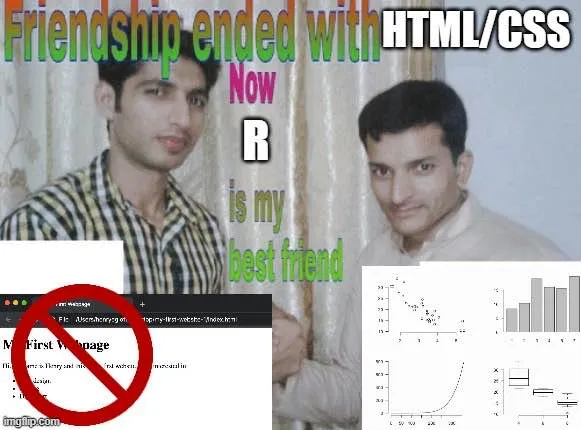
So I picked up some beginner R resources and taught myself a bit. And unexpectedly, it was (and still is!) my favorite part of epidemiology. Hell, it's still one of my favorite programming languages, much to the dismay of some of my software engineering friends.
Not only that, but I also got a basic math workbook. Yeah, a math workbook that went over K-12 math. I'm not joking. Honestly it helped so much, and I don't care how embarrassing that is to admit. There's nothing wrong with going back to the basics!! And it actually helped me a bit!!!!!
Perhaps Now Wasn't The Best Time for My Preventative Hysterectomy
Many people do know this, but I have a genetic cancer disorder called Lynch syndrome. For those who are new here and haven't heard me yap, Lynch syndrome is a hereditary cancer disorder that causes a high risk of colon and endometrial cancer, along with a constellation of other increased risks. In my case, it's a mutation in my MSH2+ gene. An old gyn oncologist of mine described my now-yeeted uterus as a ticking clock. Generally, AFAB people with MSH2+ Lynch syndrome are told to get hysterectomies by 35; because I didn't know my family history, I opted to get it slightly before turning 30.
Ironically, my Lynch syndrome is what eventually inspired me to pursue a Master's in Public Health.
There were a lot of reasons I decided to get my hysterectomy in November 2025, a month before finals, and I don't regret my decision. But yeah - it definitely didn't help my grades when I slept through deadlines and couldn't focus enough to do my problem sets. I even got a tutor through my school who would have probably been helpful for someone who didn't need as much help with math as I did. (Great tutor; I just need someone to hold my hand and explain it very slowly.)
It actually hadn't originally crossed my mind that I was getting a major surgery until I broke and told it to my tutor (along with the reason I was getting it). I'd gotten so used to talking about it that hearing his shock and insistence that I discuss it with the dean (plus consider taking an incomplete, something I maybe should have done) was a bit of a wake-up call.
How I Passed
I knew I bombed the final. After I got home, I fell into a deep depression. It was such a huge hit to my self-esteem that, even if I did pass, I wasn't sure if I had the motivation to continue.
Since Epibio was one of the 4 "core" classes, I needed a B- or higher to successfully move on. If I got anything lower, I'd have to retake it. Crucially, this would be a massive hit to my self-esteem. The grade rounded up, but how much was that actually going to help me? It might move one failing grade to another failing grade.
Or it might move the 79.6% I miraculously got to a 80%... so, a B-. I passed by the fractions of the skin on my teeth.
I wanted to think I'd be celebrating, but truthfully, it didn't change much. I was still completely miserable. It wasn't just about the idea that I could be good at math. I felt I was an absolute failure. And it wasn't like I pulled myself out of my molasses-textured depression with anything objectively meaningful. Pokemon Legends Z-A's DLC making Darkrai a main character and giving them a Mega Evolution is what pulled me up. That convinced me to say "okay, I'll give it another try."
What is there to take away, even?
I am only as good at math as I believe I can be. Sure, there'll be things I struggle with and need to work harder at, but that applies to all skills.
However, I'm not fast at math. And I don't think I ever will be.
The things I did to prepare and help myself probably got me just over the threshold I needed to pass. And I'm grateful I did those things! Unfortunately, even though I passed a class that would've been impossible for me, the joy was dulled by how much it destroyed my self-confidence.
I still love R, and I want to continue learning it; data visualization really appeals to my graphic design braincell. So I may take some R classes. I especially want to learn packages like RShiny and ggplot2, and there are classes for just that I can do after I'm done with the last core class I need.
Perhaps there are math people and not math people. Some people are just more naturally inclined to understand mathematical concepts. Everyone can do math, and everyone can learn how!
Perhaps it isn't so much of an issue of whether I can do math fast as opposed to how I use it. I have all the notes and stuff I learned in that class. It really helped me grasp public health better.
I'm glad I had to do the class. I took away so much, and I don't think I necessarily should have been exempt from it. But at the end of the day, I'm not meant to do math on a time crunch and with limited notes.